Stress-related obesity is not a calorie problem — it is a cortisol problem. This article explains how chronic stress raises cortisol, shifts fat storage to the abdomen, triggers cravings, and what dietary adjustments can break the cycle.
HbA1c measures your 3-month average blood glucose — a better metabolic health marker than fasting glucose. Learn how elevated HbA1c blocks fat loss and how to improve it.
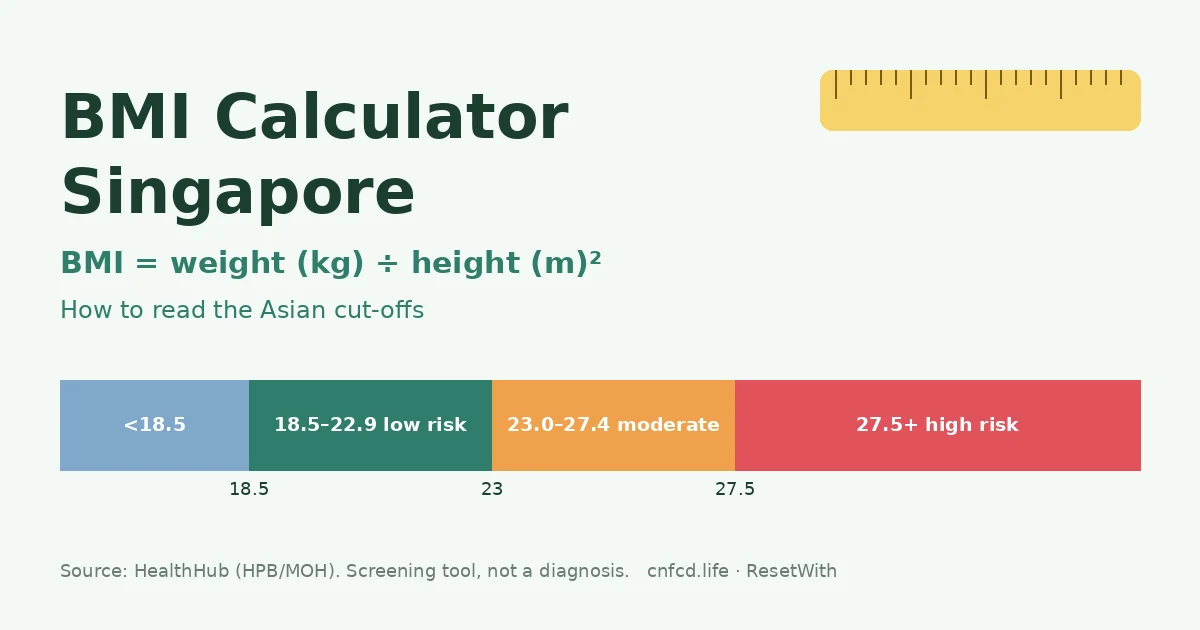
Waist circumference is a stronger predictor of metabolic disease risk than BMI or body weight. Learn why visceral fat location matters and what Taiwan's health guidelines specify.
Scale weight staying flat while your waist shrinks is a sign of body recomposition — fat decreasing, muscle maintaining. Here's why this is better than just losing scale weight.
Consistent exercise without weight loss usually comes down to 5 factors: compensatory eating, muscle water retention, cortisol from overtraining, unchanged diet, and poor sleep.